
The Latest
Has Your Warehouse Outgrown Its Original Layout? 12 Signs to Watch
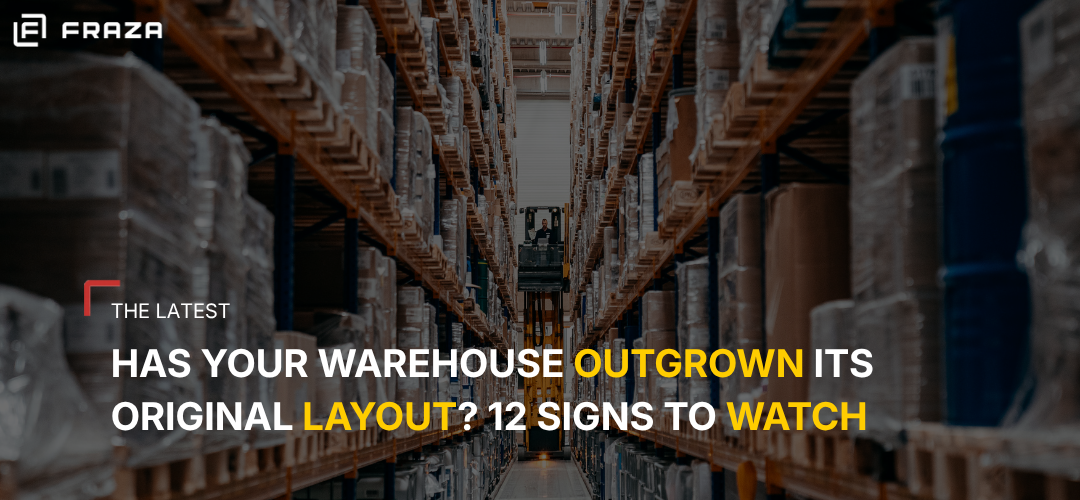
If your warehouse has recurring congestion, longer pick travel, overflow staging, and rising damage or near-misses, it has likely outgrown its original layout. That usually means storage, pick paths, and dock staging no longer match today’s volume, SKU mix, and order profile. A layout redesign can unlock capacity without expanding the building.
Quick answer: Your warehouse has outgrown its design when throughput is limited by flow (travel, congestion, staging, replenishment), not labor effort.
What Are the Most Common Signs A Warehouse Has Outgrown Its Layout?
Here’s a simple rule: If your best supervisors can only “win the day” by bending the process, you have a design constraint. Training can improve execution, but it cannot remove a structural bottleneck like poorly configured aisles, mismatched pick paths, or insufficient staging.
A Quick “Constraint Score” You Can Run This Week
Give yourself 1 point for each statement that is true:
- We regularly store product outside its intended location (or in aisles).
- Pickers wait for replenishment daily, not occasionally.
- Dock schedules drive the operation, not customer orders.
- We have consistent cross-traffic between receiving and shipping.
- Forklift travel paths cut through pedestrian work zones.
- We added racking, shelves, or pack stations without updating flow.
- Slotting accuracy is getting worse as SKU count grows.
- “Temporary” staging has become permanent.
0–2: Tune processes and slotting.
3–5: You are likely layout-limited.
6–8: You are operating a workaround warehouse, redesign will pay back fast.
12 Signs Your Warehouse Has Outgrown Its Original Design
1. Aisles Have Become Storage
When aisles hold pallets, you lose more than space. You lose predictable travel paths, lift visibility, and emergency egress. It also forces wider turning, slower speeds, and more damage.
Common root causes
- Inbound peaks exceed receiving and putaway capacity
- Locations are undersized for current pallet or case volumes
- Reserve storage is too far from forward pick faces
Typical fixes
- Rebalance reserve vs. forward pick locations
- Add or reconfigure racking and shelving
- Consider narrow aisle strategies with the right equipment
2. Your Dock is the Choke Point
If trailers wait, staging spills, or doors stay blocked, your flow is broken at the most expensive place to be broken.
Red flags
- Receiving shares staging with shipping
- You consistently “borrow” doors from the other side
- Loaded outbound sits because you cannot stage in sequence
Typical fixes
- Redesign dock approach, staging lanes, and door assignments
- Upgrade loading dock equipment and traffic controls
3. Travel Time Is Rising Faster Than Volume
A classic symptom: headcount grows, but throughput stays flat. That usually means your pick paths are longer, more interrupted, or more congested than before.
Field check
Measure average steps per order line (or average truck travel distance per pallet move) over 4 weeks. If it is trending up, your layout is taxing every transaction.
4. Replenishment Is Interrupt-driven
When pickers constantly stop to hunt replenishment, your forward pick design no longer matches demand.
Causes you can often tie to growth
- Higher SKU count without re-slotting
- Larger order variability
- Smaller, more frequent waves
Typical fixes
- Redesign slotting logic and forward pick geometry
- Add automated storage options where it fits the business case (ASRS)
5. You Have “Known Congestion Zones”
If everyone can name the hot spots, the building is telling you where flow conflicts are built in.
Common examples
- Cross-traffic between receiving putaway and replenishment
- A shared intersection between forklifts and pack lines
- Narrow turns at the end of pallet rack rows
Typical fixes
- Convert crossings into one-way loops
- Separate pedestrians and lift traffic with guard railing and protection
6. Picking Accuracy Is Slipping (Even with Good Training)
Layout drives behavior. When pick faces are cramped, labels are hard to see, or congestion forces rushed decisions, errors rise.
What to look for
- More short picks during peak
- More damage claims tied to tight staging
- More mis-slots after putaway
7. You Outgrew Your Original Product Mix
Many warehouses were designed around pallets and full cases. If you now ship more each-picks, kits, or e-commerce style orders, the “right” layout is different.
Typical fixes
- Add ergonomic pick modules and replenishment zones
- Rebuild pack and value-add areas closer to pick density
8. Safety Incidents and Near-misses Are Increasing
Growth increases motion. If the layout is not updated, risk rises quickly, especially at intersections, docks, and shared aisles.
Common contributors
- Mixed pedestrian and lift routes
- Improvised staging lanes
- Tight turning radii due to extra storage
9. Your “Fast Movers” Keep Moving
If your A-items constantly get relocated to make room, your storage design is too tight and not resilient to growth.
Typical fixes
- Re-designate zones for velocity, not convenience
- Add capacity with modular offices or mezzanines to free floor space
10. Equipment Is Fighting the Building
When lift trucks cannot turn cleanly, battery charging is jammed into corners, or you cannot expand narrow aisles safely, your facility is mismatched to your handling method.
Fraza supports narrow aisle equipment as part of warehouse solution planning.
11. You Are Paying for Space You Cannot Use
High cube looks great on paper, but if your racking, clearances, or replenishment method cannot exploit it, you are carrying unused volume.
Typical fixes
- Reconfigure racking to better match ceiling height and SKU profiles
- Evaluate vertical lifts for small parts and dense storage
12. “We’ll Fix It After Peak” Has Become the Operating Model
This is the most honest sign. If improvement work is always postponed because the system cannot tolerate change, it is time to redesign the system itself.
Why Redesigns Fail, And How to Avoid It
Most layout projects fail for one of three reasons:
- They optimize one department, not the end-to-end flow (for example, adding pick faces that block replenishment).
- They treat storage as the goal instead of throughput, safety, and service.
- They skip futureproofing (SKU growth, order profile drift, automation readiness).
A better approach is to redesign around constraints and flow, then choose the right mix of solutions: racking and shelving, mezzanines, dock improvements, automation (AGVs, ASRS), and the equipment needed to run the new design.
Practical Next Steps for an Operations Manager
Step 1: Map Your “Motion Budget”
Pick one high-volume day and capture:
- Top 20 SKU velocities
- Receiving pallet count and putaway time
- Order lines shipped and pick labor hours
- Staging occupancy at the dock (hourly snapshot)
You are looking for where motion spikes and where it queues.
Step 2: Identify The Constraint Category
Most growth constraints fall into one (or more) buckets:
- Space constraint: not enough usable locations or staging
- Flow constraint: cross-traffic, bad adjacency, long travel
- Method constraint: wrong equipment or storage mode for the order profile
- Safety constraint: unsafe mixing of people and trucks
Step 3: Build A Phased Plan, Not A One-shot Overhaul
The best redesigns often start with:
- Re-slotting and zone separation
- Racking adjustments or repair upgrades
- Dock staging redesign
- Then, if needed, automation additions like AGVs or ASRS
FAQ
How do I know if my warehouse has outgrown its original design?
You have likely outgrown your warehouse design if you see persistent congestion, product stored in aisles, dock staging overflow, frequent replenishment delays, longer pick travel, and rising damage or near-misses. These patterns indicate your layout no longer fits your current SKU mix, order profile, and volume.
What is the most common sign a warehouse has outgrown its design?
Permanent overflow storage and recurring congestion zones are the most common. They indicate your storage plan and travel paths no longer match demand.
What solutions typically help when a warehouse outgrows its layout?
Common solutions include racking and shelving changes, narrow aisle strategies, dock equipment upgrades, mezzanines, and automation options like AGVs and ASRS, depending on your operation.
How long does a layout redesign take?
Timelines vary based on scope. Many operations start with quick wins (slotting, staging, racking tweaks) and build toward phased implementation to reduce disruption.
Talk To Fraza About Your Next Layout
Talk to Fraza about a layout that scales. If you’re seeing aisle storage, dock backups, or growing travel time, Fraza can help you evaluate constraints and map a phased improvement plan, from racking and mezzanines to dock upgrades and automation options (AGVs, ASRS).
Contact us for a layout and flow conversation to review your current state and identify quick wins plus longer-term redesign moves.